Section 13.2 Sampling distributions
Subsection 13.2.1 Sampling from a uniform distribution
Animation shows histograms for N=20, sampled from a uniform distribution, along with mean (red line). Uniform distribution in this case is integer values from 1 to 10.
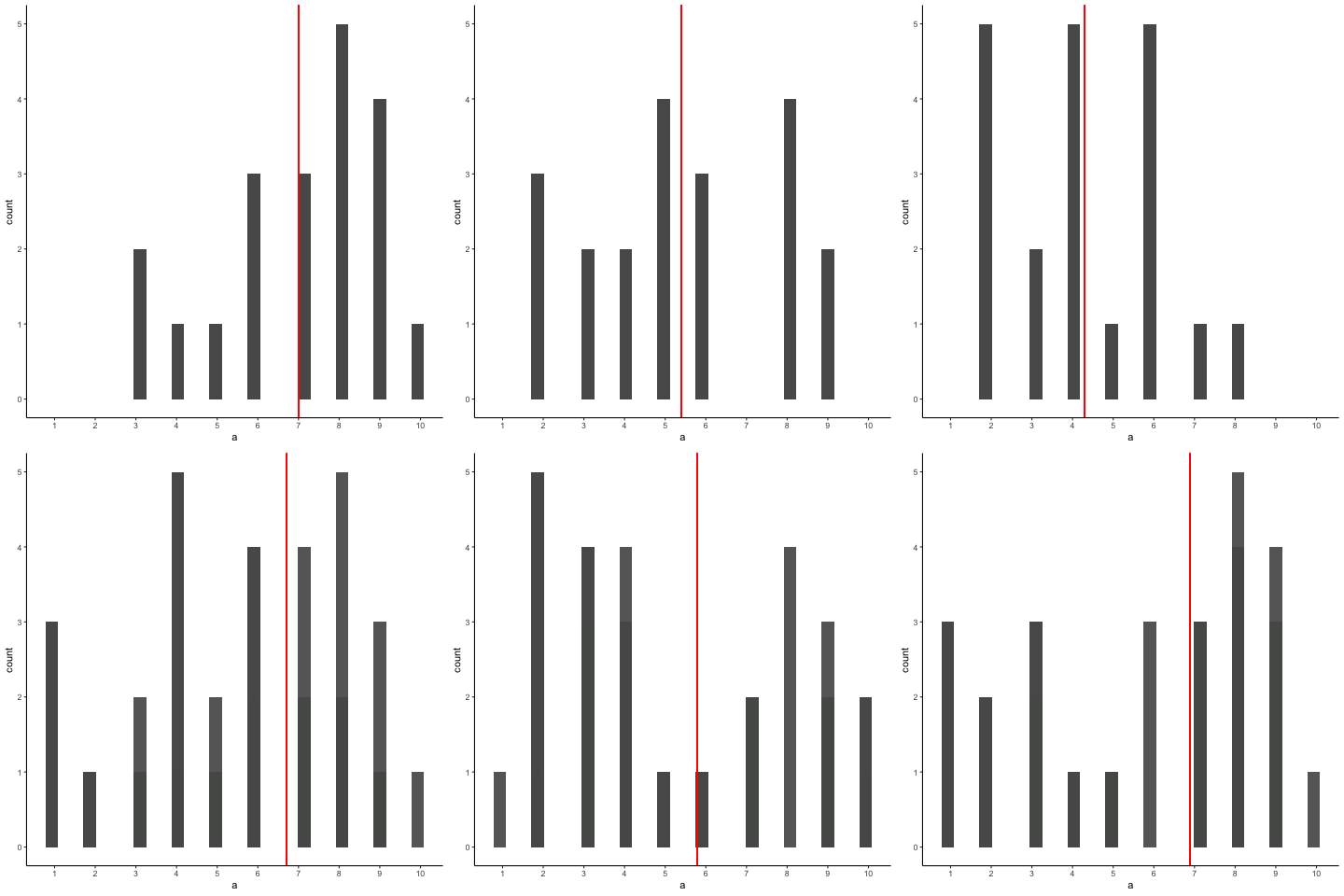
a<-round(runif(20*10,1,10))
df<-data.frame(a,sample=rep(1:10,each=20))
df2<-aggregate(a~sample,df,mean)
df<-cbind(df,mean_loc=rep(df2$a,each=20))

library(gganimate)

ggplot(df,aes(x=a, group=sample,frame=sample)) +
  geom_histogram() +
  geom_vline(aes(xintercept=mean_loc,frame = sample),color="red")+
  scale_x_continuous(breaks=seq(1,10,1))+
  theme_classic()+
  transition_states(
    sample,
    transition_length = 2,
    state_length = 1
  )+enter_fade() +
  exit_shrink() +
  ease_aes('sine-in-out')
Subsection 13.2.2 Sampling from uniform with line showing expected value for each number
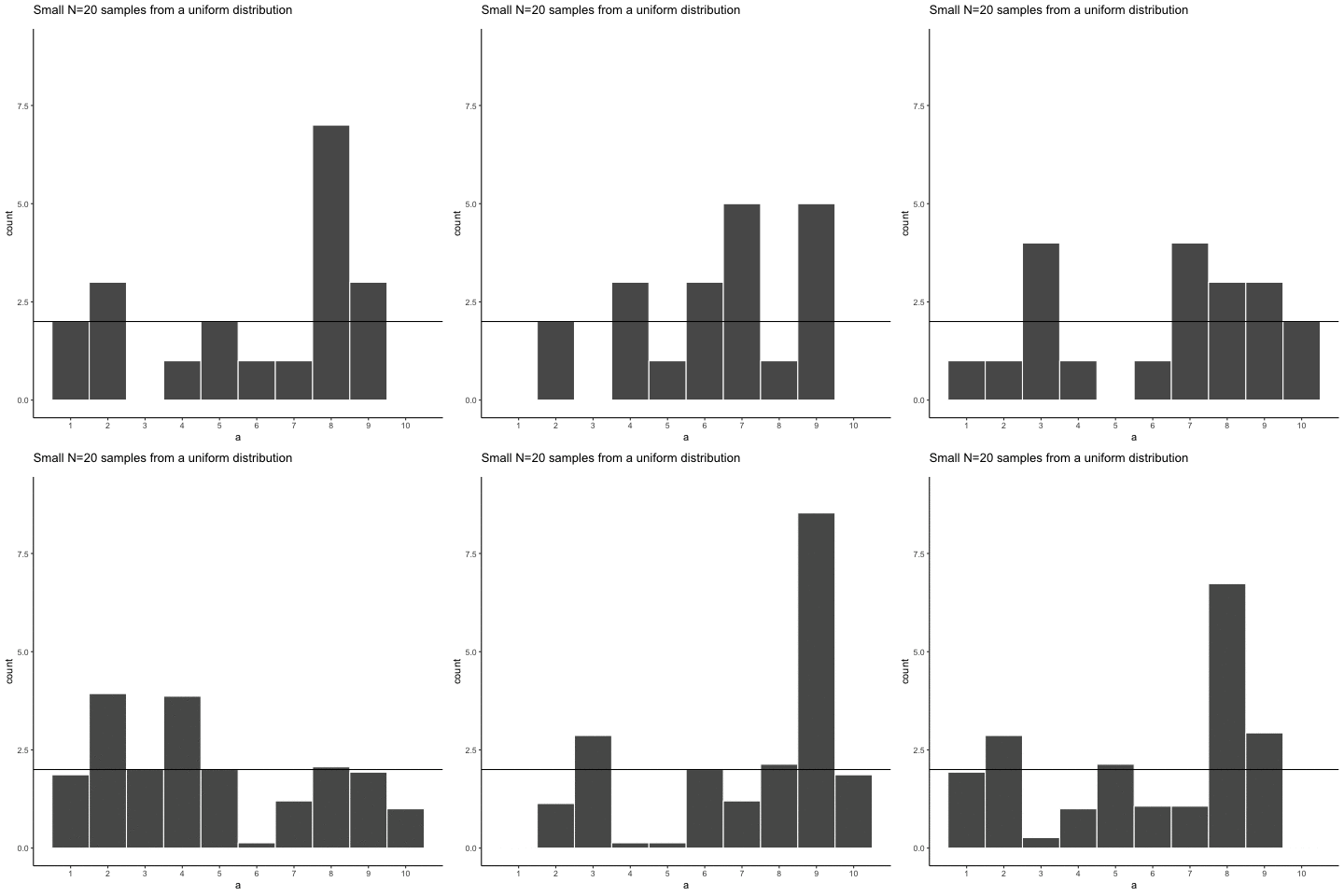
a<-round(runif(20*10,1,10))
df<-data.frame(a,sample=rep(1:10,each=20))


library(gganimate)
ggplot(df,aes(x=a))+
  geom_histogram(bins=10, color="white")+
  theme_classic()+
  scale_x_continuous(breaks=seq(1,10,1))+
  geom_hline(yintercept=2)+
  ggtitle("Small N=20 samples from a uniform distribution")+
  transition_states(
    sample,
    transition_length = 2,
    state_length = 1
  )+enter_fade() +
  exit_shrink() +
  ease_aes('sine-in-out')
Subsection 13.2.3 Sampling distribution of the mean, Normal population distribution and sample histograms
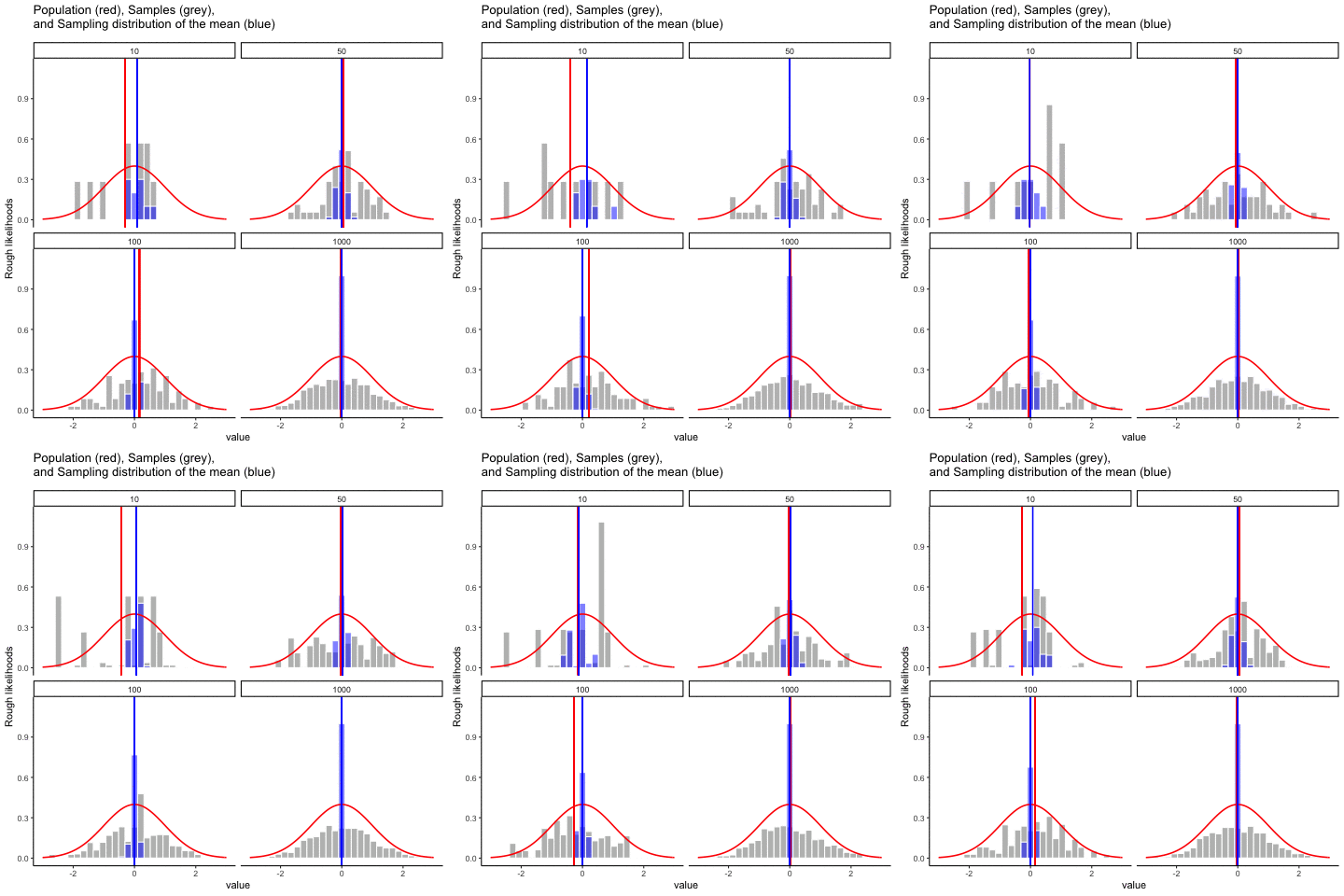
This animation illustrates the relationship between a distribution (population), samples from the distribution, and the sampling distribution of the sample means, all as a function of n
Normal distribution in red. Individual sample histograms in grey. Vertical red line is mean of individual sample. Histograms for sampling distribution of the sample mean in blue. Vertical blue line is mean of the sampling distribution of the sample mean.
Note: for purposes of the animation (and because it was easier to do this way), the histograms for the sampling distribution of the sample means have different sizes. When sample-size = 10, the histogram shows 10 sample means. When sample size=100, the histogram shows 100 sample means. I could have simulated many more sample means (say 10000) for each, but then the histograms for the sample means would be static.
The y-axis is very rough. The heights of the histograms and distributions were scaled to be in the same range for the animation.
get_sampling_means<-function(m,sd,s_size){
  save_means<-length(s_size)
  for(i in 1:s_size){
    save_means[i]<-mean(rnorm(s_size,m,sd))
  }
  return(save_means)
}

all_df<-data.frame()
for(sims in 1:10){
  for(n in c(10,50,100,1000)){
    sample<-rnorm(n,0,1)
    sample_means<-get_sampling_means(0,1,n)
    t_df<-data.frame(sims=rep(sims,n),
                     sample,
                     sample_means,
                     sample_size=rep(n,n),
                     sample_mean=rep(mean(sample),n),
                     sampling_mean=rep(mean(sample_means),n)
                     )
    all_df<-rbind(all_df,t_df)
  }
}


ggplot(all_df, aes(x=sample))+
  geom_histogram(aes(y=(..density..)/max(..density..)^.8),color="white",fill="grey")+
  geom_histogram(aes(x=sample_means,y=(..density..)/max(..density..)),fill="blue",color="white",alpha=.5)+
  stat_function(fun = dnorm,
                args = list(mean = 0, sd = 1),
                lwd = .75,
                col = 'red')+
  geom_vline(aes(xintercept=sample_mean,frame=sims),color="red")+
  geom_vline(aes(xintercept=sampling_mean,frame=sims),color="blue")+
  facet_wrap(~sample_size)+xlim(-3,3)+
  theme_classic()+ggtitle("Population (red), Samples (grey), \n and Sampling distribution of the mean (blue)")+ylab("Rough likelihoods")+
  xlab("value")+
  transition_states(
    sims,
    transition_length = 2,
    state_length = 1
  )+enter_fade() +
  exit_shrink() +
  ease_aes('sine-in-out')
Subsection 13.2.4 Null and True effect samples and sampling means
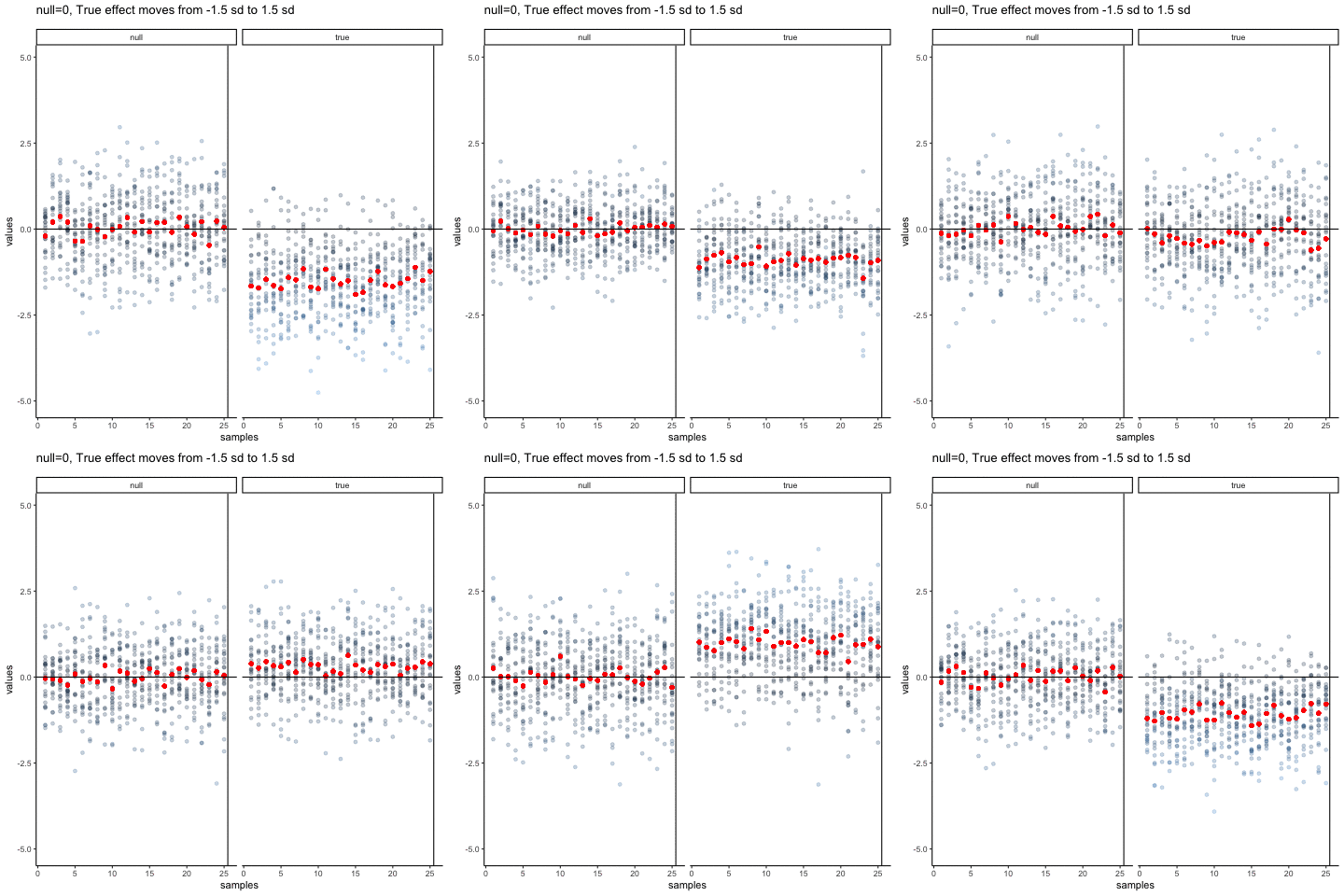
The null dots show 50 different samples, with the red dot as the mean for each sample. Null dots are all sampled from normal (u=0, sd=1). The true dots show 50 more samples, with red dots for their means. However, the mean of the true shifts between -1.5 and +1.5 standard deviations of 0. This illustrates how a true effect moves in and out of the null range.
all_df<-data.frame()
all_df_means<-data.frame()
dif_sim<-seq(-1.5,1.5,.25)
for(sim in 1:13){
  values<-c(rnorm(25*25,0,1),rnorm(25*25,dif_sim[sim],1))
  samples<-c(rep(seq(1:25),each=25),rep(seq(1:25),each=25))
  df<-data.frame(samples,values,sims=rep(sim,50*25),type=rep(c("null","true"),each=625))
  df_means<-aggregate(values~samples*type,df,mean, sims=rep(sim,50))
  all_df<-rbind(all_df,df)
  all_df_means<-rbind(all_df_means,df_means)
}

all_df<-cbind(all_df,means=rep(all_df_means$values,each=25))

ggplot(all_df,aes(y=values,x=samples))+
  geom_point(aes(color=abs(values)), alpha=.25)+
  geom_point(aes(y=means,x=samples),color="red")+
  theme_classic()+
  geom_vline(xintercept=25.5)+
  facet_wrap(~type)+
  geom_hline(yintercept=0)+
  theme(legend.position="none") +
  ggtitle("null=0, True effect moves from -1.5 sd to 1.5 sd")+
  transition_states(
    sims,
    transition_length = 2,
    state_length = 1
  )+enter_fade() +
  exit_shrink() +
  ease_aes('sine-in-out')

